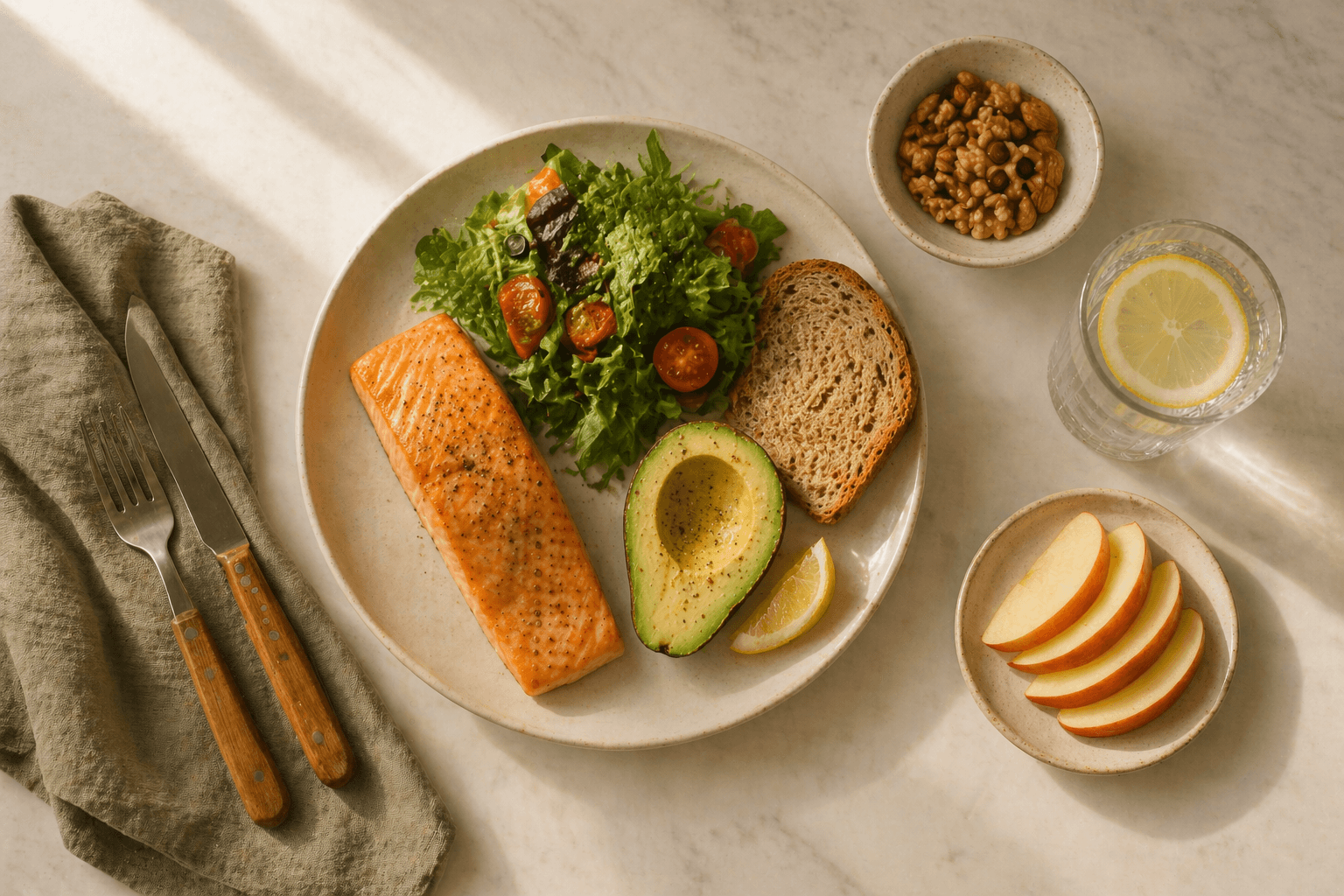
Pregnancy food rules online read like a panic list. Deli meat, sushi, soft cheese, coffee, tuna, honey, herbal tea, everything. Half of it is outdated. A quarter is wrong. The rest is real but could use context. This post cuts through it using current FDA, CDC, and ACOG guidance.
TL;DR: The real pregnancy food risks are listeria (unpasteurized dairy, cold deli meat, soft cheeses unless heated, refrigerated smoked seafood), mercury (shark, swordfish, tilefish, king mackerel, bigeye tuna), and raw or undercooked meat and eggs. Everything else is either fine or just needs moderation. Two to three cups of coffee a day is fine. Pasteurized soft cheese is fine. Cooked sushi is fine.
What is actually dangerous in pregnancy
Three categories of food risk during pregnancy, based on current FDA and CDC guidance.
Listeria-risk foods. Listeria monocytogenes is a bacteria that pregnant people are ten times more likely to contract than the general population (CDC). It can cross the placenta and cause miscarriage, stillbirth, or neonatal infection. The foods to avoid or heat:
- Unpasteurized milk and dairy (raw milk, most farmers-market cheese).
- Soft cheeses unless the label clearly says pasteurized. Brie, feta, queso fresco, queso blanco, blue cheese, camembert. If pasteurized on the label, they are safe.
- Refrigerated smoked seafood (lox, smoked salmon from the deli). Canned or shelf-stable smoked seafood is fine.
- Cold deli meat, hot dogs, cold cuts. The fix is easy: heat them until steaming (165 F or 74 C). Then they are safe.
- Refrigerated pâté or meat spreads. Shelf-stable canned pâté is fine.
- Pre-made deli salads containing meat, eggs, or seafood (tuna salad, chicken salad, ham salad) sold at deli counters.
- Sprouts (alfalfa, clover, radish, mung bean). Bacterial risk is hard to eliminate.
- Unwashed produce.
Mercury-risk fish. Mercury harms fetal neurological development. The FDA's current guidance is clear on which fish to avoid and which to eat (FDA Advice on Eating Fish):
- Avoid entirely: shark, swordfish, king mackerel, tilefish (from the Gulf of Mexico), bigeye tuna, orange roughy, marlin.
- Eat 2 to 3 servings per week of "best choices": salmon, shrimp, canned light tuna, catfish, cod, tilapia, trout, pollock, Atlantic mackerel, sardines, scallops, clams.
- Limit to 1 serving per week: albacore (white) tuna, yellowfin tuna, mahi-mahi, halibut, snapper, grouper.
Raw or undercooked meat, poultry, seafood, eggs. Toxoplasma (from raw meat) and salmonella (from raw eggs) are both dangerous in pregnancy. Cook beef to 145 F, pork and poultry to 165 F. Skip raw or lightly cooked eggs (including homemade hollandaise, Caesar dressing, cookie dough, and soft-scrambled eggs in a restaurant). Pasteurized eggs or egg-substitutes are fine for these uses.
Sushi, explained
This one gets oversimplified. The safe breakdown:
- Cooked sushi is fine. Shrimp tempura, California roll, crab roll, eel (already cooked), teriyaki chicken roll, fully cooked spicy tuna if prepared with seared or cooked tuna.
- Raw sushi is a judgment call. In the US, commercial sushi-grade fish is flash-frozen to kill parasites, which reduces the biggest risk. The remaining risk is listeria. The FDA recommends pregnant people avoid raw sushi. Many practitioners, including me, share that guidance as the cautious default. Many pregnant people in Japan eat raw sushi routinely with no known excess risk. Your call.
- Avoid: raw sushi from gas stations, buffets, or anywhere without high turnover. Avoid fish on the high-mercury list (bigeye tuna, marlin) regardless of preparation.
Coffee and caffeine
ACOG's guidance is up to 200 mg of caffeine per day is safe in pregnancy (ACOG). That is:
- One 12 oz cup of drip coffee (95 to 200 mg depending on strength)
- Two shots of espresso (63 mg per shot, so two shots is 126 mg)
- Two 8 oz cups of black tea (about 47 mg per cup)
- Four 12 oz cans of most sodas (30 to 45 mg each)
Count the caffeine in tea, chocolate, and soda too. Most pregnant people can have their usual morning coffee without issue. Going entirely caffeine-free is not required.
Alcohol
No known safe amount during pregnancy. The CDC and Surgeon General recommend zero alcohol for the duration (CDC). The risks of fetal alcohol spectrum disorders are real and unpredictable at any trimester.
Foods that got unfairly blamed
Several foods got added to pregnancy avoid lists that never really belonged there.
Honey. Safe for pregnant people. The infant botulism risk is for babies under one year, not for your gut. Pasteurized or raw, does not matter for you.
Peanuts and peanut butter. Safe during pregnancy (no allergy in mom). Current AAP and NIAID guidance focuses on early peanut introduction to the infant to reduce allergy risk, not maternal consumption. Eat peanuts if you enjoy them.
Spicy food. Does not induce labor, does not harm the baby, does not cause pregnancy heartburn in any uniquely dangerous way. If your stomach handles it, enjoy it.
Herbal tea. Most common teas (peppermint, ginger, rooibos, chamomile in moderation) are fine. Avoid: pennyroyal, licorice root in large quantities, red raspberry leaf before the third trimester, saw palmetto, goldenseal, blue cohosh. When in doubt, ask your provider.
Pineapple. Does not induce labor. The bromelain concentration is way too low. Safe throughout.
Citrus. Totally safe, actually beneficial (vitamin C, folate).
Vegetarian and vegan diets. Both are safe during pregnancy with attention to iron, B12, choline, and omega-3s. Your prenatal vitamin covers most of it. Talk to your OB or a dietitian about specifics.
What to prioritize eating
After the "do not eat" list gets all the attention, most people forget what they should add. Current pregnancy nutrition priorities:
- Folate (folic acid). 600 mcg per day. Leafy greens, legumes, fortified cereals, prenatal vitamin.
- Iron. 27 mg per day. Red meat, beans, fortified cereal. Pair with vitamin C for absorption.
- Calcium. 1,000 mg per day. Yogurt, milk, cheese, fortified plant milks, leafy greens.
- Vitamin D. 600 IU per day. Fatty fish, fortified milk, sunlight. Most prenatal vitamins include this.
- DHA omega-3. 200 mg per day. Salmon, sardines, DHA-supplemented eggs, algae oil supplement.
- Choline. 450 mg per day. Eggs (the yolk), liver, soy. Often under-supplied by prenatal vitamins.
- Water. 10 to 12 cups per day. Dehydration is one of the most common causes of false-alarm preterm contractions.
Food safety in daily life
A few habits that cover most of the listeria and foodborne illness risk:
- Wash all produce, even pre-washed bagged greens.
- Use separate cutting boards for raw meat and produce.
- Don't eat leftovers more than three days old.
- Keep the fridge at 40 F or below.
- If you're unsure whether a cheese is pasteurized, skip it. Most grocery-store cheeses are pasteurized in the US but farmers market and imported cheeses may not be.
- Heat deli meat to steaming before eating, or skip.
What I tell my Jacksonville clients
The biggest mistake I see is pregnant people restricting themselves way more than the evidence actually supports, then being miserable. Pregnancy is nine months. You can eat a pasteurized brie sandwich. You can have your morning cup of coffee. You can eat shrimp tacos. Worry about the clear rules (no unpasteurized dairy, no high-mercury fish, no alcohol, cook your meat, heat your deli meat) and relax about the rest.
FAQ
Can I eat deli meat if I microwave it first?
Yes. Heating to steaming (165 F or 74 C) kills listeria. Fifteen to thirty seconds in the microwave does it.
Is it safe to have a cup of coffee every morning?
Yes. ACOG's limit is 200 mg of caffeine per day, which is roughly one 12 oz cup of drip coffee or two shots of espresso.
Can I eat canned tuna?
Canned light tuna is a "best choice" by the FDA guide. Eat it two to three times a week freely. Albacore (white) tuna has more mercury, limit to one serving a week.
What about sushi with no raw fish?
Cooked sushi (California roll, shrimp tempura, teriyaki chicken roll) is fine. Avoid sprouts on the roll.
Can I eat cheese on pizza?
Yes. Baking kills listeria. Hot pizza cheese is fine.
Is raw cookie dough safe?
No, because of raw eggs (salmonella) and uncooked flour (E. coli risk). Cookie dough made with pasteurized eggs and heat-treated flour, sold as edible cookie dough, is safe.
Can I drink kombucha?
Most providers recommend avoiding it during pregnancy. It is unpasteurized, has trace alcohol, and has bacterial risk similar to unpasteurized dairy.
What about sushi during my anniversary dinner at a nice restaurant?
Your call. The risk is low at a quality restaurant with fresh, flash-frozen fish. Many clients stick to cooked rolls. Some have a single piece of nigiri. I do not judge either.
For trimester-specific meal planning and food safety checklists, see the Mom to Emotion Pregnancy Planner. It includes a printable fridge-magnet "yes and no" food list.