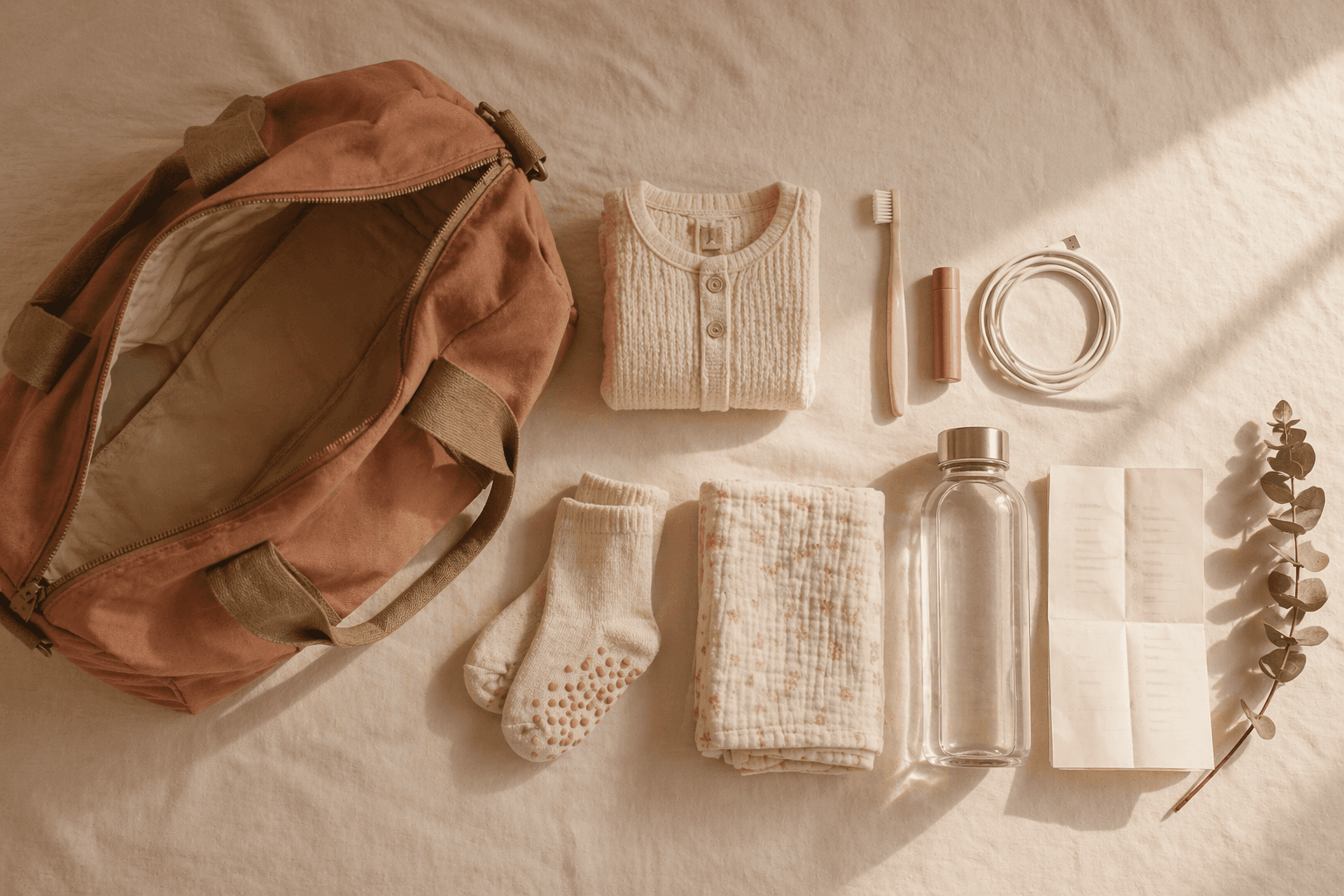
Most hospital bag lists on Pinterest are written by someone who packed one bag, one time. This one is from a Jacksonville doula who watches the same bags get unpacked at Baptist, Mayo, UF Health, and Ascension week after week. You do not need half of what the internet tells you. You need a specific, useful list, and the timing to pack it.
TL;DR: Pack your bag by thirty-six weeks. Split it into three: the labor bag (what you use during birth), the recovery bag (what you use the next two days), and the going-home bag. The partner needs their own small bag. Keep the car seat in the car already installed.
When to pack the bag
By thirty-six weeks. Not later. About one in ten US babies is born before thirty-seven weeks, per the most recent CDC data (10.4 percent preterm rate), and if labor starts early you do not want to be throwing clothes into a duffel bag between contractions.
The labor bag, what you actually use during birth
Most of what people pack for labor goes unused. Here is what I see clients reach for:
- Lip balm. Hospital air is dry and you breathe through your mouth during contractions.
- Hair ties or a headband. Your hair will end up everywhere.
- Flip-flops or slides for the shower. L and D showers are communal and the floor is questionable.
- Your own pillow with a colored pillowcase. So it does not get mixed up with hospital linens and sent to laundry.
- Phone charger with a long cord. Ten feet. The outlets are never where you want them.
- A lightweight robe. For walking the halls. The hospital gown is easier to discard for monitoring.
- Massage oil or lotion. Unscented. Your partner applies it during back labor. Fragrance can make nausea worse.
- Birth plan, two printed copies. One for the chart, one for the nurse. See how to write a one page birth plan.
- Socks with grip bottoms. Your feet get cold. Plain socks are slippery on hospital tile.
- Electrolyte drinks or clear popsicles. Check what your hospital allows. Most Jacksonville hospitals permit clear fluids.
- Small snacks for between contractions. Crackers, applesauce pouches. Nothing heavy.
Leave home: candles, essential oil diffusers (not allowed in most hospitals), decorative birth mandalas, anything breakable, your laptop, heavy books.
The recovery bag, what you use the next one to two days
You will be in the postpartum unit for twenty-four to forty-eight hours after a vaginal birth, longer after a cesarean. The hospital provides a lot. What to bring:
- Loose pajamas that button down the front. Easier for breastfeeding. Nothing that goes over your head the first few days.
- Comfortable underwear you do not mind throwing out. Two or three pairs. Plus the disposable mesh underwear from the hospital.
- Nursing bras or soft sleep bras. Not a regular bra. Your breasts will change dramatically.
- Nipple cream. Lanolin or any version. Hospital lactation can help but bring your own.
- Shampoo, conditioner, face wash, toothbrush, toothpaste. Travel sizes of what you use at home, not generic hospital soap.
- Glasses instead of contacts. You will be too tired to deal with contacts for days.
- Extra-long phone cable. Yes, bring two.
- Dark-colored bath towel. The hospital towels are thin.
- Slippers you do not mind getting dirty.
- A water bottle with a straw. Breastfeeding makes you thirsty in a way you cannot predict. The hospital cup is small.
- Small toiletry bag with Tylenol, Colace, any medications you take. Check with your OB about bringing your own meds.
Leave home: full bath towels, a hair dryer (most hospitals have one), anything that will not fit in a standard overnight bag.
For the baby
The hospital provides diapers, wipes, swaddles, pacifiers, bottles if needed, and newborn formula. All of it. You do not need to bring these.
What you do need:
- One newborn going-home outfit. With socks, hat, and a mitten if it is cold. Onesies with front zippers are easiest. Skip the fancy matching newborn set, you will not use it.
- A backup outfit one size up. If your baby is born above eight pounds, newborn sizing will not fit.
- A thin swaddle blanket you like. Hospital ones work fine, bring one of your own if you prefer a specific pattern for photos.
- An installed car seat in the car. Not in the hospital bag. Install it by week thirty-five. Have it inspected free at a fire station in Jacksonville if you are unsure.
Leave home: baby clothes for every possible size, pacifiers (the hospital offers), diapers (the hospital gives you a pack for home), a stroller.
For the partner
Pack a separate small bag for them. Easy to forget and easy to regret.
- Two changes of clothes, including something they can sleep in on a pull-out couch.
- Toothbrush and toothpaste.
- Phone charger.
- Snacks, especially for the 3 a.m. hours when nothing is open.
- A book or something not phone-based, for the long stretches.
- Cash for the vending machines.
- A blanket or hoodie. Hospital rooms run cold.
Documents you actually need
- ID for both parents.
- Insurance card.
- Birth plan (two printed copies).
- Your OB or midwife contact info.
- Your list of emergency contacts.
- Pediatrician name and phone number.
- If you are doing direct-entry cord blood banking or donation, the kit from the provider.
What the hospital gives you, no need to pack
Every Jacksonville-area hospital (Baptist, Mayo, UF Health, Ascension St. Vincent's, Memorial, Flagler) provides the basics. Expect these in your room:
- Disposable mesh underwear (bring these home, do not be shy)
- Super-absorbent postpartum pads
- Peri bottle for rinsing after the bathroom
- Witch hazel pads
- Dermoplast or similar numbing spray
- Ice packs that double as overnight pads
- Newborn diapers, wipes, blankets, nasal aspirator
- Formula if you choose
- Pitcher of water, ice chips, popsicles
- Tylenol and ibuprofen on schedule
If your hospital offers a take-home bag, accept it. It is for you.
Cesarean-specific additions
If you know you are having a scheduled cesarean, add:
- High-waisted, loose underwear that sits above your incision line.
- Longer nightgowns or pajamas that do not rub on the incision.
- A small pillow for the ride home to cushion your abdomen against the seatbelt.
- Extra help lined up at home. You will not be driving for two weeks or lifting anything heavier than the baby for six.
What I see in practice
Clients always overpack. I have watched families wheel three large bags into a triage bay when one medium duffel was plenty. The room is small, the couch is narrow, and you will be doing the opposite of organized. Keep it lean.
The one exception is snacks. Always overpack snacks. The cafeteria closes at 8 p.m. at most local hospitals and it is painful to be hungry at 2 a.m. on nothing but crackers.
FAQ
When should I pack the bag?
By thirty-six weeks. Four percent of babies arrive before thirty-seven weeks. Packing at thirty-nine weeks with contractions is miserable.
Should I pack for going home in my pre-pregnancy clothes?
No. Bring something forgiving that you wore around twenty weeks pregnant. You will not be back in pre-pregnancy jeans when you leave the hospital, and that is normal.
Do I need to bring formula?
No. Every Jacksonville hospital provides free newborn formula if you want it. If you have a specific preference (lactose-free, organic), check with your pediatrician and bring that brand.
What about a going-home outfit for the baby?
One newborn outfit, one slightly larger backup. Skip the suitcase of adorable outfits you saw on Instagram.
Do I really need two phone chargers?
Yes. One will get lost, one will get left behind. Each should have a long cable because hospital outlet placement is hostile.
What if I deliver in the middle of the night?
That is when seventy percent of babies decide to come. The packed bag plus the installed car seat means you grab and go, no decisions required.
The Mom to Emotion Pregnancy Planner includes this checklist as a printable one-pager along with a cesarean-specific version and a postpartum-at-home supply list. For in-person help walking through the plan at a prenatal visit, my Birth Doula Package covers it at week thirty-four.