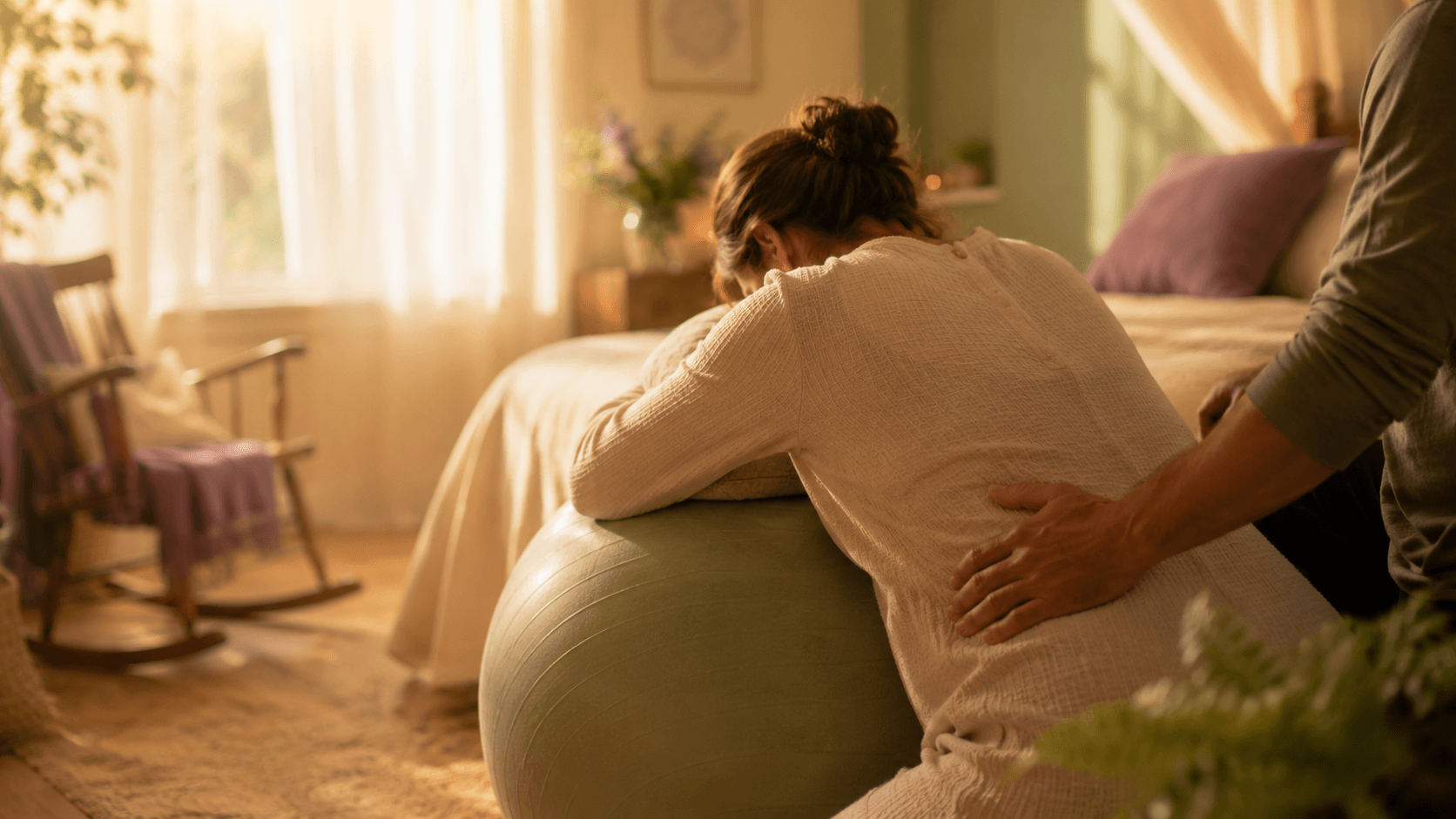
Most of the unmedicated-birth advice on the internet is either too vague to use ("just breathe") or so prescriptive it falls apart in a real hospital room ("seventeen positions to try"). After supporting Jacksonville families through hundreds of unmedicated and medicated births, this is the small kit of techniques I actually reach for at 3 a.m. in a triage bay.
TL;DR: Unmedicated birth coping is mostly about three things: lowering the cognitive load on your brain so it can ride the contraction instead of fighting it, using counter-pressure and position changes to physically reduce pain signal, and shaping the room (light, sound, presence) so your hormones can do their job. The five techniques that work hardest are slow breathing, hip squeezes, water immersion, vocalization, and the quiet right person standing close to you. The rest is helpful but optional.
Why the right environment matters as much as the techniques
Labor hormones, especially oxytocin and endorphins, are exquisitely sensitive to environment. Bright fluorescent lights, strangers asking questions every ten minutes, a TV running in the corner: each of these spikes your cortisol and dampens the hormones your body is using to keep labor moving and manage pain. Before you ever try a single breathing technique, change the room.
What that looks like in a Jacksonville hospital: dim the lights, close the door, turn off the TV, put your own playlist on. Ask the nurse for the "monitoring intermittent" option if your OB has approved it, so you are not tethered to the bed. Bring a small lamp, a battery candle, and your own pillow from home. These small environment changes are not decoration. They are the first comfort technique.
The breath techniques that hold up
Forget elaborate Lamaze patterns. Two breath techniques actually hold up under contraction pressure:
Slow breathing. Inhale through the nose for a count of four, exhale through the mouth for a count of six. The longer exhale activates the parasympathetic nervous system, which is the calming half of your nervous system. This is the workhorse breath for early and active labor.
Voice-led exhales. Once contractions are intense, the exhale needs somewhere to go. Low moans (think a low "ohhhh" or "ahhhh" from the chest, not the throat) keep your jaw relaxed, which keeps your pelvis relaxed. High-pitched screaming clenches the diaphragm and tightens the pelvic floor. The single most useful coaching cue I give families is "let it out lower."
Position changes and physical counter-pressure
You will hear "movement is medicine" in every birth class, which is correct but unspecific. Here are the four positions and movements that earn their place in active labor:
- Hands and knees. Especially valuable for back labor (when baby is in a posterior position). Takes pressure off the spine. Lets the baby rotate.
- Standing and swaying. Arms around your partner's neck, hips swaying side to side. Combines gravity with relaxation.
- Side-lying with peanut ball. If you need to rest, a peanut-shaped exercise ball between your knees keeps the pelvis open. Most Jacksonville hospitals have peanut balls on the unit. Ask.
- Hip squeezes. Your partner or doula places hands on the outside of each hip and presses inward and forward during a contraction. Done right, this can dramatically reduce the perception of contraction pain. This is the single most-requested support technique I provide in practice.
Water as the actual second epidural
Hydrotherapy (laboring in water) is sometimes called "the midwife's epidural" for good reason. A deep tub of warm water tends to reduce the perception of contraction intensity by about a third for most birthers, according to Cochrane Review data on water immersion in labor.
Practical reality in Jacksonville hospitals: most local hospitals now have at least one room with a tub. UF Health, Baptist South, and Memorial all support laboring in water, with policies that vary on actually birthing in water. Birth centers will support both. Home births can use an inflatable birth pool.
If a full tub is not available, a long warm shower with the spray on your low back is the next best thing. Bring flip-flops and a partner who is okay getting wet.
The mental techniques that earn their place
Three mental techniques actually work in active labor; everything else is decorative.
One contraction at a time. The single most powerful mental shift in labor is refusing to think about how many more contractions you might have. Each contraction is the only one you need to ride. When it is over, you rest. The next one comes when it comes.
Naming the sensation as work, not damage. "This is intense work" is biologically accurate. "This is unbearable pain" sets off a different cascade in the brain. Reframing is not toxic positivity. It is using accurate language to keep your physiology cooperating.
An anchor. One physical object or person you fix attention on during a contraction. A photo, a phrase written on a sticky note, your partner's collarbone, the breath count. The anchor catches your attention so it does not spiral into "I cannot do this."
The quiet presence of the right people
The research on continuous labor support, summarized in the 2017 Cochrane Review of 26 trials covering over 15,000 women, is unambiguous: having continuous support shortens labor, reduces cesarean rates, reduces the need for pain medication, and increases reported satisfaction. The strongest effect is with continuous support from someone who is neither hospital staff nor the partner alone.
What this looks like in practice: a doula who has been with you since early labor, a partner who has practiced support techniques in prenatal visits, and the smallest number of strangers entering the room. Each new person entering a labor room is a small interruption in the hormonal state. Manage that.
What I see in practice
The Jacksonville families who finish an unmedicated labor in the state they hoped for share three things. They had a contingency plan that did not feel like failure (epidural was on the table if needed, no shame either way). They did not try to memorize every comfort technique; they had four or five they had practiced. And they had at least one person in the room whose only job was to be calm and close, with no agenda about how the birth "should" go.
The ones who struggle the most are the ones who treated unmedicated birth as a test to pass. The body senses that pressure and tightens. Comfort techniques work best when nothing about your dignity is riding on them.
Frequently asked questions
How long can I labor at home before going to the hospital?
For first-time parents, the general rule is the 5-1-1 (contractions every 5 minutes, lasting 1 minute, for 1 hour). For second babies and onward, more like 7-1-1 or even sooner. Your provider may have a different threshold. Our full guide is in Early Signs of Labor: When to Actually Go to the Hospital.
What if I change my mind during labor?
You change your mind. That is allowed. Asking for an epidural is not a failure of preparation. It is a tool that exists for a reason. The work you did to prepare for unmedicated labor is not wasted; you will use those skills before and after the epidural too.
Are there any positions to avoid?
Flat on your back in bed, for long stretches, slows most labors and can compress the major blood vessels in your pelvis. If you must be in bed for monitoring, lie on your side or use a peanut ball between the knees.
Does counter-pressure really help?
Yes, especially for back labor. Have your partner practice the technique in late pregnancy by standing behind you while you lean on a wall, hands on the outside of each hip, pressing inward as you breathe out. The pressure should make you say "more of that, please."
The fastest way to prepare for an unmedicated birth is to practice these techniques with your partner before labor starts. The Birth Doula Package at Nurture Your Habits includes two prenatal visits where we run through them together, in your home, with your specific birth plan in mind. Book a free consultation to get started.